
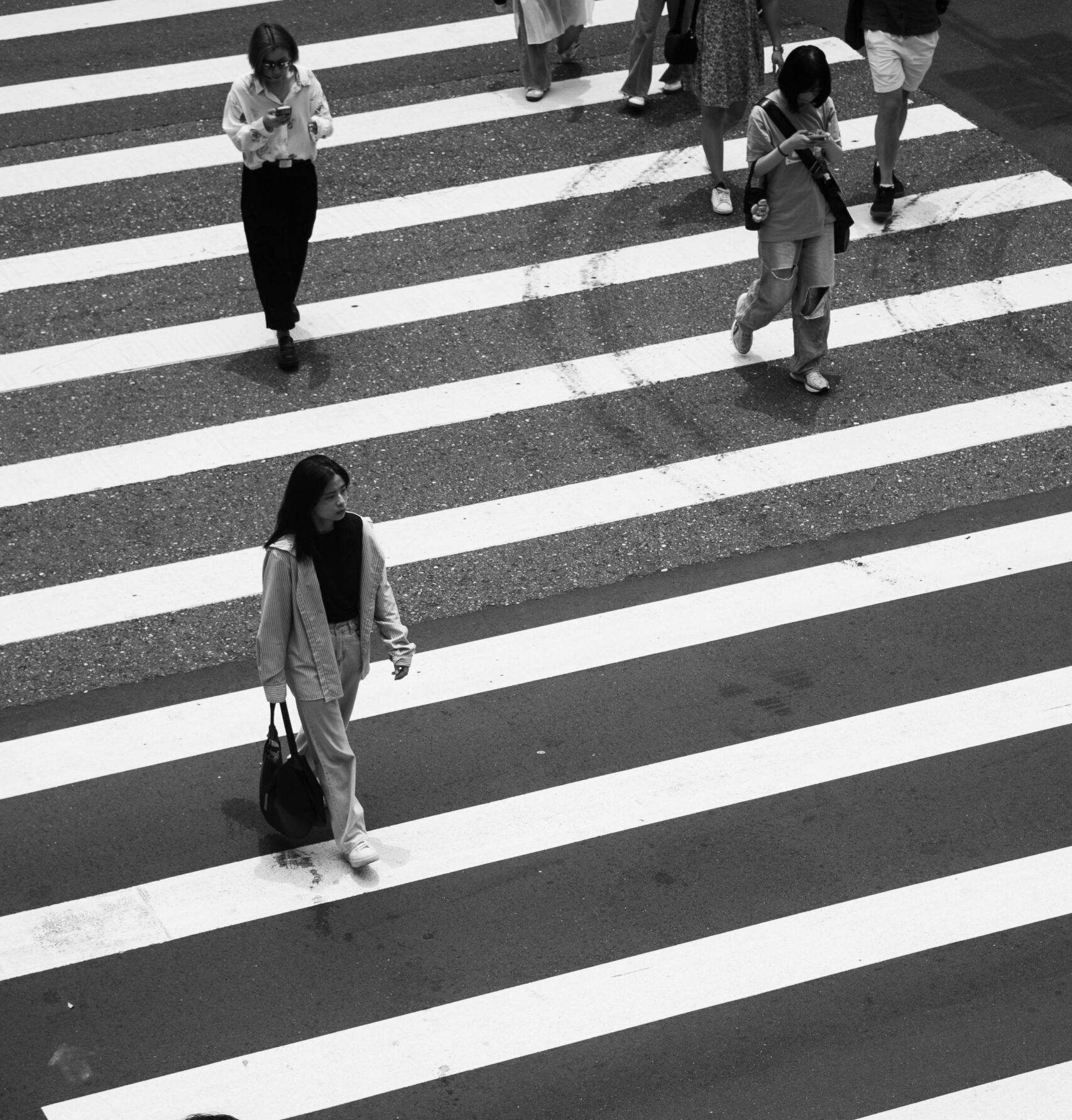
Before you even knew what courses you were taking, you knew what you were bringing to wear. It sounds insignificant, but it isn’t.
Moving to a new city as a student means rebuilding yourself from scratch, that is to say, new people, new routines, and then a new version of you. And before you find the right words in a new language or the right group to sit with at lunch, you already made a first impression, with what you wore. A friend once told someone at a party: “You look so Belgian”. No explanation needed, since the outfit said it.
We could consider Jönköping as full of these silent conversations. The campus brings together students from dozens of countries, and each of them arrives with a suitcase full of references, not just clothes, but a whole visual vocabulary shaped by where they grew up. You can notice it the way someone layers, the colors they reach for, the shoes they chose to pack. It is not random, and it tells you something.
This sort of reflection came from the videos of a 25-year-old designer from Mumbai that went viral earlier this year. Diya Joukani sells her own handmade embroidered pieces under the label Diya’s Duniya, “Diya’s World” in Hindi. To promote them, she films herself living her normal life in the city: drinking chai at a roadside stall, climbing on a construction vehicle, wandering through the streets. No studio. No filters. Just Mumbai and her clothes in it.
So people watched, and then they copied, not the outfits, but the format. Creators from Benin, Eritrea, Madagascar, Mexico started doing the same thing, showing their own cities, their own everyday life, and their own outfits. Places that rarely appear in fashion conversations suddenly did. And that raised the question: Why did “cool” always seem to come from the same few cities, Paris, New York, London? Who decided that, and when?
Diya never set out to answer that question. She just made clothes she liked and walked outside. But without planning it, she shifted the idea that style has a postcode, and that postcode is always Western. It doesn’t. Cool is not a place. It’s what happens when someone is completely themselves, wherever they are.
For students arriving in Jönköping, the parallel is simple. You are already doing a version of this, existing in a new place, carrying your own references, figuring out how they fit here. The way you dress is part of how you introduce yourself to a city that does not know you yet.
You do not need to adapt it. You can just wear it.
Writer: Lylia Snoussi